

Annamaria on Monday
Prologue
To readers other than the one addressed: As a regular visitor, Everett Kaser has been a part of Murder is Everywhere for many years. His frequent comments and responses on this blog contribute insight, humor, often wicked humor, and a deep understanding of what the authors who are regulars here are trying to do, both in their books and in their weekly or biweekly posts. I address him as EvKa because he long ago began addressing me as AmA. Though I know him only in this virtual world, his presence is always a plus for me. In fact, a few weeks back he made a comment on Zoe’s post that, to me anyway, requires more than a few sentences in response:
Dear EvKa, In your comment on Zoe's Post - "Diving into the Story" - you described storytelling techniques that you despise: prologues, flashbacks, and multiple points of view. I was nonplussed at the vehemence with which you described your dislikes, since I use all of these techniques when I tell a story. Not all of my novels have prologues, but some of them do. And all of them contain flashbacks and all of them are written from multiple points of view, never in the first person which you so passionately expressed as the only kind of story you really enjoy. In this billet-doux, (and it is a love letter of sorts) I want to tell you that your comment made me think about the pitfalls of the techniques you ordinarily reject.
So I set out today, not to change your mind about what you like. De gustibus non disputandum est, after all. I hope to demonstrate today what I gleaned from thinking more analytically about the fiction writing tools that often ruin a story for you. The examples I will give are ones that I can easily illustrate. They very likely involve stories you have experienced. True my examples are not on the page but on the screen. I still think they can be instructive.
Regarding prologues: here is an example of a story that starts with one. In the film, it lasted twelve minutes. Think of it as the first 12 pages of a novel, which would make it a lot longer than the average prologue in print, but you will get the idea.
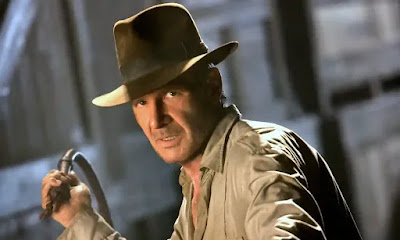
As "Raiders of the Lost Ark" goes on from this beginning, it echoes things dramatized in this first scene, which portrays Indy in action and enhances not only a viewers' suspension of disbelief and understanding of his character, but also their enjoyment of the arc of the story. We really get it when Indy encounters those snakes in Egypt. And believe it when he disarms a Nazi with his whip!
Lesson for me: if the prologue doesn't do these things it's probably superfluous. In addition to which, it must be engaging and entertaining. The best prologues, like this one, read like a short story.
Regarding multiple points of view: The second scene of "Raiders" stays with Indy's point of view. But the third one switches to Marian's, in her bar in Nepal. Even when Indy enters the bar, the focus is on Marian's point of you. And so it goes. The arc of the story switches points of view throughout the rest of the film, sometimes to the villains', and for a while, the camera actually follows a monkey. Why? Because the monkey's point viewpoint keeps the action fast-moving, clear, and entertaining.
Lesson for me: the point of view character needs to be the one whose actions move the story along, make the most difference in the outcome of the tale, or whose emotions are most strongly engaged.
Regarding flashbacks: They can intensify the emotions the story elicits. "Casablanca" begins with a prologue needed to engage the audience. If it started with Rick and Ilsa in Paris, would there as much suspense? Instead the beginning sets the scene: refugees from the war are desperate and the Nazis make their situation all the more dangerous and painful. By the time we meet the mysterious main character, Rick, we care about the people around him and are wondering what role he will play in solving their problems. We immediately see that he is a cynical and bitter man. And soon we find out that his worst enemy is a love song:
At this point the audience is ready, desperate to know what really happened. The flashback does a lot more than answer a burning question. It sets up the suspense and greatly intensifies the emotions evoked by the rest of the story.
The lesson here I think is crystal clear. The flashback's job is to answer questions critical to the story and to deliver those answers when they are most wanted and will have the greatest impact.
Here's lookin' at you, EvKa. Thank you for this inspiration. In so many ways, you bring out the best in us.


0 Yorumlar